Showing posts with label Solar Power. Show all posts

Sunday, November 2, 2025

Playing With Solar

Friday - I had to renew my passport as it was expiring in around five months. A couple of weeks ago, I used the online renewal process and the site indicated that I should receive the new passport book by 12/1/2025. I assumed that the current government shutdown could push that date out even more. The replacement showed up in today’s mail. I guess that part of the government is still working and, it’s working well! 

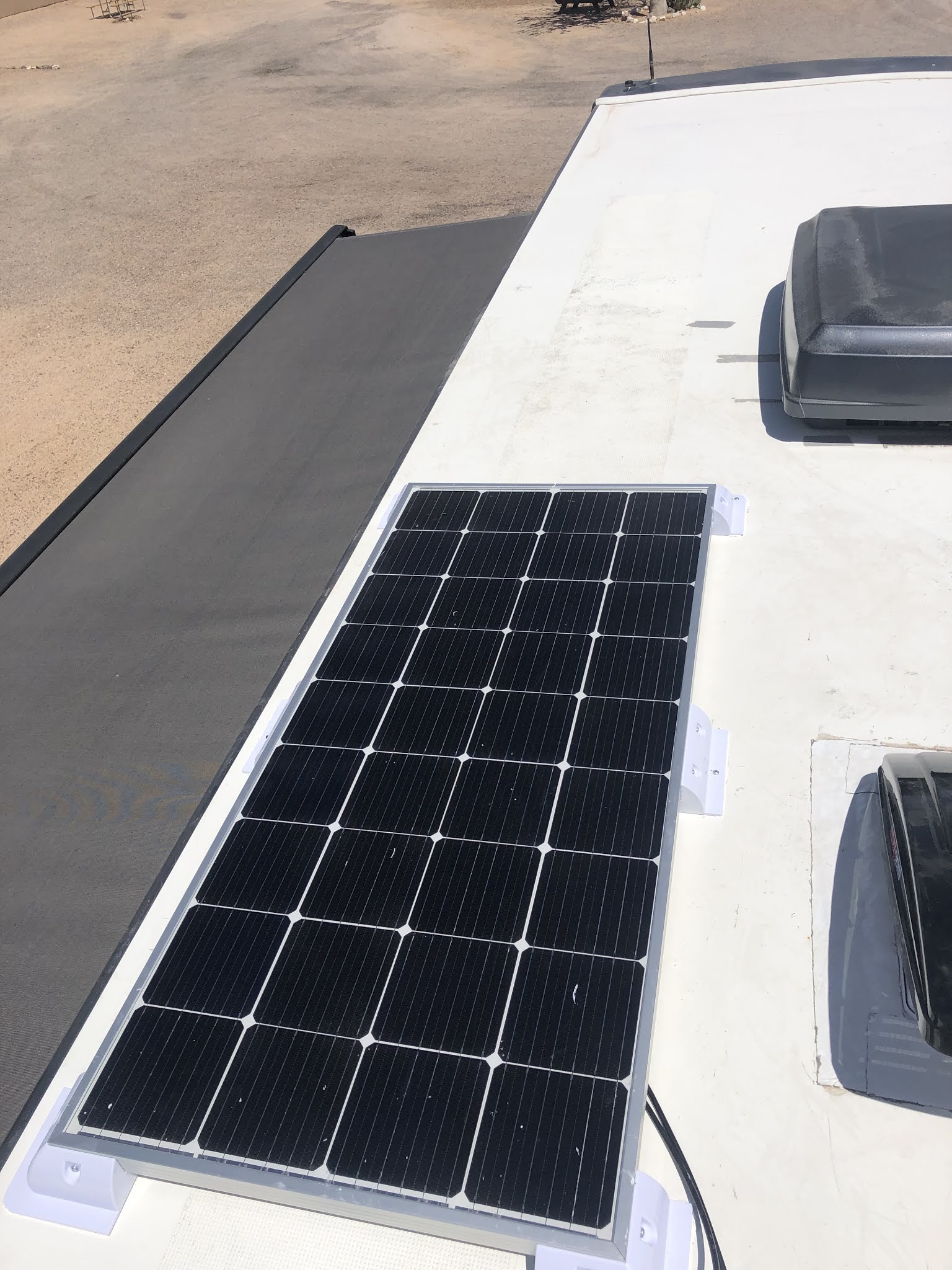
Saturday - This morning, I tilted the solar panels roughly south to see if it makes much of a difference. While up on the roof, I checked the output of each panel. Open circuit voltage on both panels were 22.5V, so good. The short circuit current was not as good. One panel was 7.6amps and the other was 6.3amps. When they are wired in series, the lower current kind of determines the max current of the string. On both the class A and class C, I’ve noticed that the max current rarely goes above about 7amps. 

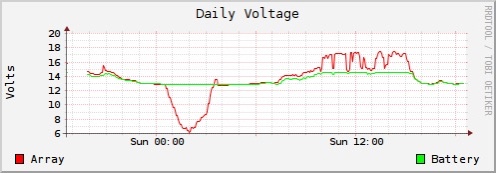
Sunday - This graph was generated today (with the panels tilted to the south at about the optimal angle. I would’ve expected something closer to 10amps. Though I may need to have the inverter/charger disabled so it would stay in bulk. 

Sunday, April 6, 2025

Finishing the Solar

Friday - I didn't even get around to making coffee this morning. I moved the class C to the street in front of our lot to finish the solar installation. One of the challenges was the limited space in the bench seating. I fabricated a small divider to support the charge controller. It looks sturdy enough. I made the cables between the solar disconnect switch and the charge controller using the same 10AWG wire for the run from the roof into the compartment. I used 6AWG wire from the charge controller to the Lynx distributor. After checking polarity, I powered everything back up. It's kind of overcast, but the battery was still fully charged, and it went into absorption within a few minutes. After moving the RV back to storage, I turned on the Multiplus. I'll see what the SOC is tomorrow morning and how long it takes to bring the battery back to 100%.

Except for a couple of mounting bolts and more screws into the roof, the solar project is mostly done. I still have one more panel to mount and have all of the bits and pieces to get that done. I just need some cooler weather. I stopped at about 11:30 as it was already over 80°F and very muggy.

Saturday - This morning, I put in three screws on each strut channel into rafters. I believe that the rafters are just tubular aluminum based on the shavings that come out when drilling.

I also installed the fan with inlet and outlet grills. This just happens to be the outlet. I can’t quite finish this project as I need a temperature controller. I had an extra one, somewhere, but I can’t seem to find it. 

Sunday - We have visitors! LivingLightRV are visiting from Canada, so we took them to the RiverWalk, the Alamo, and one of the missions. We had a wonderful lunch at a Mexican restaurant on the RiverWalk with enough leftovers for dinner. 

I found the spare temperature controller and wired it in to control the fan. The fan works but the jury is out on whether there will be enough airflow. 

Tuesday, February 21, 2023

Tyson Wash LTVA - BLM

Sunday - It only went down to 43°F last night. It really did feel warmer. The batteries were at 38% at 7:30 when we started the generator. I adjusted the Magnum inverter/charger for just under 90amp output with about 75amps going into the batteries. As the sun rose higher and solar charging kicked in. I lowered the Magnum output to keep the current into the batteries <80 amps as recommended by SOK. Max is 50 amps charging per battery but 40 amps is the recommended charge rate. 

I dusted off the solar panels as they were pretty dirty. They hadn’t been cleaned in several months so maybe I'll pick up a few watts.

Monday - It's really nice weather again today. About 72°F, sunny, with no wind, and not a cloud in the sky. I did participate in a test session this afternoon from outside. No awning or mat due to the frequent winds around here. It is so quiet out here. Wonderful!

Tuesday
 - The no-wind weather may be ending today. The forecast is for wind with major gusts so anything outside will be put away this afternoon. 

Another test session this morning. It went pretty quick as the candidate was well prepared. A candidate showed up at the last minute for the afternoon session so I jumped on into Zoom. 


The sun is getting higher as we move towards Spring. A couple of months ago, we were barely peaking at 300 watts. Over 400 watts is a little bit better but we have seen over 500 watts last week. We still end up running our generator for several hours every morning to get the battery SOC to about 88%. The solar will then top them off by about 2:30 or so. To avoid running the generator, we will need to double the solar as the first 15-20 amps are just keeping things running. Actual charging of the batteries is currently around 15 amps from our current peak of 30 amps. We’ll see how much it improves in a month or two. 


Sunday, September 18, 2022

Tucson

Thursday - Cleaned the solar panels and got an appointment for a RV wash and wax. I turned off the charge function of the Magnum inverter just to see if the panels produce a bit more than 350 watts.

Friday - See Titan Missile Museum

Saturday
 - It was nice and cool-ish this morning, at least cool enough to have breakfast outside. By 9:00, it was starting to warm up. By 10:30 it was time to hit the pool. Into the low 90s, not a single cloud in the sky, and only 19% humidity. 

On Wednesday, I ordered some mid-distance “computer glasses” since I was on Zoom just about every day. The were done yesterday afternoon. Pretty impressive service. They had told me a week to ten days so I never expected two days. 

Sunday
 - I dug the e-bikes out this morning and we rode along the Pantano Wash trail which runs right next to the RV park. Apparently, this trail runs a long way. Most of the riders were the serious riders with skinny tires and colorful jerseys. But, with the pedal assist, we weren’t passed by very many riders. 

The Broadway St bridge is known for large numbers of bats flying out at dusk. This is commemorated by this metal sculpture just north of the bridge along the bike path. 

There was a colorful sunset as I headed for the pool. It had cooled to 90°F by 7pm. 


Tuesday, May 4, 2021

Day 51 - Acton, CA - TT

The power is still out in the RV park and we needed to do some laundry so the generator was turned on at noon. And, since it’s running, we may as well use the A/C plus I made a batch of rice in the Instant Pot. 

I was curious about the solar panel voltage. The specs for the panels say Vmpp is around 22VDC and Impp is 9.3amps. With three of them in series, I’m only seeing around 52VDC and 7amps. It felt like a pretty sunny day today. 

To check the third panel, I switched to the first two panels in series. Then the last two panels in series. I got the same result which means all three of the panels are fine. In Benson, the first two panels were making 350watts now 226 watts. Clearer skies in AZ maybe (less “haze”).

We ran the generator for about four hours. Tomorrow is a travel day. 

Monday, May 3, 2021

Day 48, 49, 50 - Acton, CA - TT

Saturday (48) - An absolutely beautiful day here in Acton, CA. It's only 70°F right now, but then again, it's only 10am. I'm waiting for the morning test session. This place isn't as crowded as I had expected since it is a weekend and not that far from Los Angeles. The pool was very refreshing yesterday afternoon though they didn't have the hot tub open. And the second pool was still closed. 

I'm still playing around with the Victron software options. This is Victron Connect running on my laptop and connecting with the charge controller via Bluetooth. This is the software used to configure the charge controller. From inside the RV, the Bluetooth signal is low but I can still connect using the laptop. The phone needs to be much closer to get a reliable connection. One nice feature is that I can export the data as a CSV file. Since we are currently plugged into shore power, we aren't using much power from the batteries. 

We went towards L.A. to meet Bridget’s oldest at a Mediterranean take on Korean BBQ. There was a mixture of protein some with Korean marinades. And the appetizers were half Korean and half middle eastern. Quite the mix. 

Sunday (49) - Power shut off at 8:05am and there were a lot utility trucks running around. I think it may have been planned but there wasn’t any communication. Anyway, a nice test of our solar. 

The one shadow across one panel was sufficient to drop the voltage down to the mid-30s (VDC). Once the shadow moved mostly off the panel, the voltage increased to 50VDC then up to 65VDC once the shadow was completely off. This is a known drawback of series connected panels. If they were in parallel, only the shaded panel would be affected. Nevertheless, the batteries are still at 100%. 

A staff member stopped by and said that the power may be off for a couple of days  

Monday (50) - Today, we get to really test out our new solar. The batteries are pretty low now with the state of charge (SOC) of 53%. The recommended minimum for lead acid is 50%. 

To get here, I prepared dinner completely using electricity. Sous vide, induction cooktop, and microwave. Plus, the propane furnace was used for heat (we didn’t need much). You may notice that cooking really didn’t start until near sunset. I’ll update as the day progresses. 

This morning, we headed into downtown LA. I hate large cities of any kind and this was miserable for me. We told my middle son to meet us at 11am. He didn’t show up and his phone repeatedly went to voice mail. The parking for the 1hr wait was $10. Did I mention that I hate cities…

At 4pm, the batteries were back up to 80%. The power is still out and we had both fans running all day long to keep the inside of the RV at a “reasonable” temperature. So we can’t count on the three panels to get the batteries back from 50% in a single day. But, that was not the current plan. I need to find out how much power the inverter draws when only the Raspberry Pi, HomeAssistant, and the WiFi running. Currently, they run on 110VAC. 

Friday, April 23, 2021

Day 39, 40 - Benson, AZ - TT

Thursday (39) - It's a windy morning so I'm doing the ham radio testing thing from inside the RV. By windy, there are gusts into the mid-30s (mph). This generally means that I can't have the awning out so it gets a bit warm in addition to the wind noise over the Zoom session. It turns out that there is only one candidate but 8 VEs. A bit overkill but it's still nice to be able to visit with the others.

This may be defined as the point of no return. That is a ¾" hole in the roof. I then fed the photovoltaic wires through the hole and ran them through a bulkhead fitting with two gland connectors. I filled the hole with expanding foam before glueing the bulkhead fitting down. 

Rubber inside the connectors compress around the wire when tightened. To ensure a tight fit, I filled the gland fitting with silicone caulk before tightening down on the wires. I will go over the edges and the screw heads with self-leveling Dicor after installing the panels. 

Another Apple virtual award for Earth Day. I thought the design looked kind of cool. 

Friday (40) - One of the panels arrived on Thursday afternoon. It seems huge. I screwed in the ABS mounts on the four corners of the panel and the middle of the long dimension. I applied Sikaflex 252 after scuffing the mount with 80 grit sandpaper and cleaning the roof with acetone. They seem pretty solid but in addition, I used a stud sensor to locate the aluminum roof “beams”. I put one screw through each bracket into a beam to hold while the glue dries. 

Here is panel one of three. After the Sikaflex cures for a few days, I’ll cover the screws with Dicor. I went ahead and terminated the photovoltaic cable with MC4 connectors and added the 15amp fuse to the positive side. I then verified polarity at the switch before feeding the charge controller. 

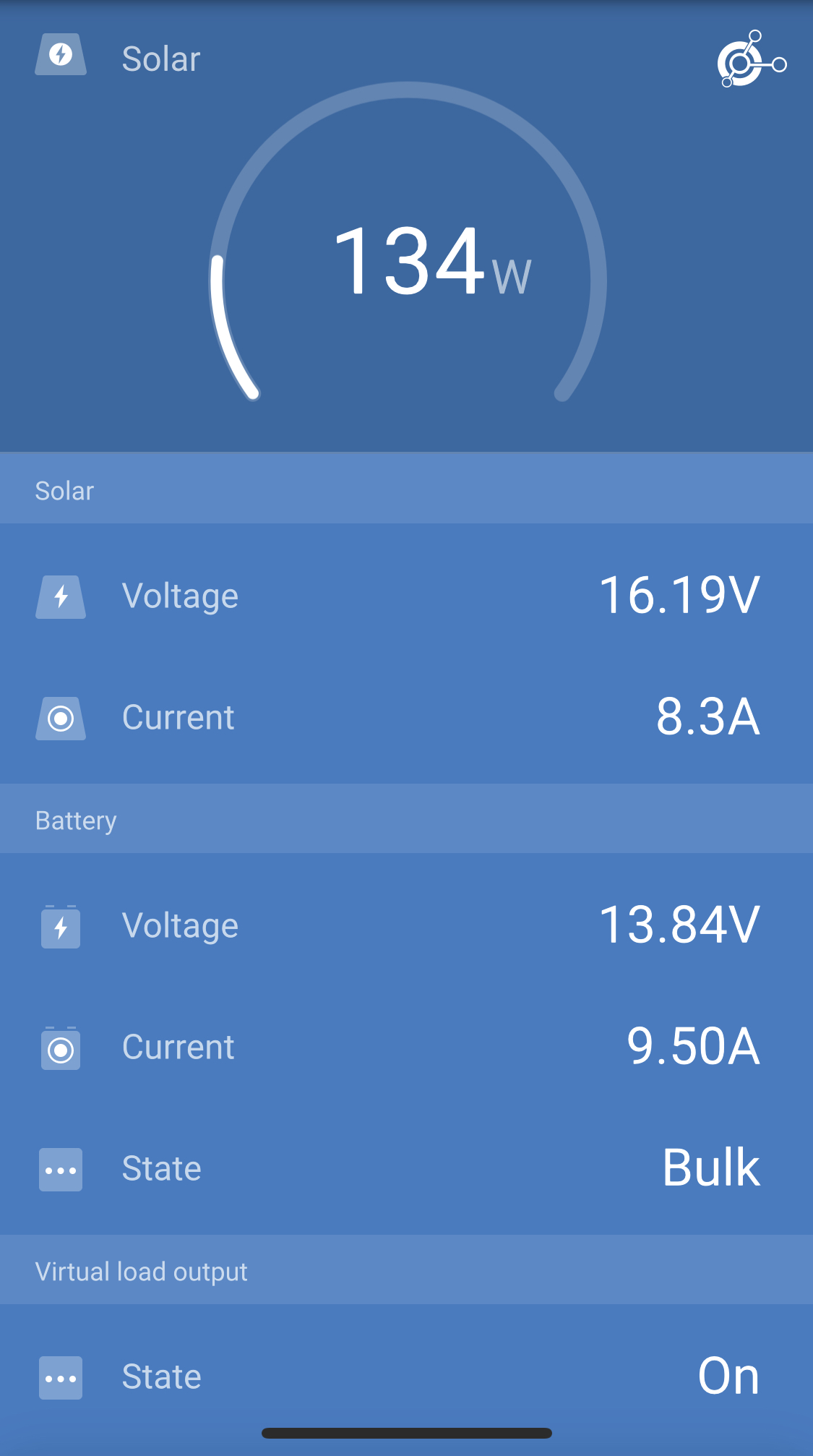
This is the screen on the Victron phone app showing panel and battery voltage and current. With only one panel, the resistive loss in the 82’ of cable from the roof to the charge controller is significant. With two more panels in series, the resistive loss will be less significant. 

Sunday, June 30, 2019

Pi Problem

This was kind of disconcerting to see this evening. The Raspberry Pi that is monitoring the Tristar charge controller was down when I picked up the trailer yesterday. I simply rebooted it. Have not had a problem with the Pi before.

We now have a full water tank, empty grey and black tanks, and a full refrigerator. What more do we need? Tomorrow we head south towards Anchorage. Not quite sure where we will be camping. Probably parking in a rest area. 

Tuesday, February 26, 2019

Day 49 - Buyer Beware

It actually went above 70°F today for the first time since we’ve been here. It’s been another uneventful day which included a trip into Fort Mojave for groceries, and sitting in the pool for a while. A couple of other RVers had asked about the solar and DC setup as they saw me up on the roof installing the new panel. I gave them the tour but mostly emphasized what I thought was important. Heavy wire (low resistance), include a battery monitor, full sine wave inverter with a transfer switch, and have the charge controller as close to the batteries as you can. And if you use flooded batteries, make sure the box vented to the outside.

One of the guys mentioned that he had a “solar expert” look at his motorhome. They recommended 300 watt panels designed for a grid-tied system (that’s probably what they had in stock), mounting the MPPT charge controller above the refrigerator and simply tying the output of the charge controller into the 12 VDC panel below the refrigerator. The batteries were around 20 feet away with probably only a 6 AWG run from the DC panel. All this for the bargain price of $2k plus batteries. I suggested that he run away as fast as possible from that “solar expert”. The RVer was a retired electrician and thought that some of the information sounded off to him but he never dealt with DC so he didn’t feel comfortable doing it himself. He liked the look of my installation and took notes. The “solar expert” also recommended mounting the solar panels next to the refrigerator roof vent to simplify running the cables ignoring the fact that it would be shaded by the TV antenna and the air conditioner. So do your research and don’t believe someone just because they claim to be the “experts”.

Monday, February 25, 2019

Day 48 - Warm(er) Weather!

There was an article in the local paper that mentioned the upgrades being done at Needles Marina where we are staying. Due to lower water levels of the Colorado River, the marina needed to be deeper. The amount I heard was over 10’. Plus, they wanted to accommodate larger boats. The boat launch ramp also needed to be extended as it ended just below water level. That would be a shock to anyone launching a boat. (There was a warning sign about the drop off.

We are finally going to get some warmer weather with highs in the 70s (°F) for the rest of the week. Bridget may finally get some nice enough weather to play with her kayak again. I think the “plan” is for Wednesday. We check out of here on Friday. Our month-long stay ending.

Just another solar comment, before 10:00 AM, the system was already into absorption mode. Granted, it was only down by 12%. This can be seen when the array voltage (red) goes above the battery voltage (green). The horizontal axis is AKST not local time. It seemed to be an easier way to get consistent data while we are traveling. Where we are in Needles, CA, only a few hundred yards to the east is MST. I turned off auto time zone on my phone since the time depended on which cell tower you connected to. I had wondered why the charge controller never went into “float”. As long as you are drawing power from the battery, it will stay in absorption. The refrigerator and fans are always drawing power during the day.


Sunday, February 24, 2019

Day 47 - More Solar Blah, Blah, Blah

Another mostly clear day though the morning was a lot of high clouds. We went through another 30# of propane but I had forgotten to close one of the roof vents twice. Heating the outdoors takes a lot of propane. But by about 1:00, it was above 60°F and not too windy so I headed for the pool. It was nice as long as you were in the water.


Yesterday evening, I was reading through one of my favorite solar power blogs by someone calling himself HandyBob. One of the most recent posts was titled “2018 WARNING… TURN THE VOLTAGE DOWN” (the all caps were his). His posts are very straightforward and to the point and blasted many of the solar energy experts, manufactures, and vendors. His recommendations are what I had used to set up the solar on the RV. So when I saw the title, it caught my attention.

The gist of this post was that if you were following his original recommendation of setting absorption voltage to 14.8 volts for flooded batteries, you should turn it down to 14.6 volts. His original recommendation was based on information from Trojan and Crown. Crown had revised their recommendation. I suspect that he must have mentioned this in one of his other posts as the DIP switches on my Tristar controller were already set to absorption voltage =14.6 volts. But I didn’t remember what I had set. So this post is a reminder.

Back in 2016. I had originally ordered an MPPT charge controller (not the Renogy one that I mentioned in my blog post) before I ran into his site but I quickly canceled the order and picked up a Morningstar Tristar PWM controller per the recommendations on his site. I couldn’t be happier with the choice. That’s how convincing the information is on his site. His background is electronics and isn’t selling anything on his web site. A lot of people look for him to fix their broken solar installations. IMHO, it’s an entertaining read. BTW, the vendor I had ordered the MPPT controller from was on his “evil” list i.e. do not do business with them as their only motivation is revenue. The manufacture of that particular MPPT controller is no longer in business. Originally, I had thought that the DIP switches on the Tristar would limit the flexibility of the controller but there is a “Custom” DIP switch setting allowing you to change just about all of the parameters using a software program. What surprised me is that there is sufficient flexibility to set the controller up to even charge the new fangled LiFePO4 batteries using the custom settings. 

Saturday, February 23, 2019

Day 46 - Solar Panel Installation Followup

I had mentioned in yesterday's post about possibly lowering the new solar panel. The backside of the panel is about ¼" from the junction box so the whole panel can't be lowered but I did lower the side facing the edge and the panel still clears the box by about ⅛". I'm thinking that even though it clears, I may not want to have such little clearance with vibration or snow load, the panel will probably hit the box. So I raised it back up.

This morning at about 8:00, I turned off the shore power. At this point, the batteries were at 88% according to the Trimetric battery monitor. Three cups of coffee with the Keurig machine, a few minutes running the microwave, running the refrigerator off of the inverter, Bridget's curling iron, and TV and Internet watching YouTube videos this morning. Plus all of the laptop and device charging and FantasticFan running during the day. By 11:00, the charge controller had switched to absorption and by noon, the batteries were already at 102%. This is with all five panels flat on the roof and peak current was over 25 amps. The real test will be in about a week when we will be dry camping again for a bit. I terminated the “test” and switched us back to shore power at about 3:30. The Trimetric monitor said 104% and only an amp going into the battery bank. The refrigerator was still running off of the inverter.

The Dicor was drying nicely with the horizontal applications looking nice and smooth. I used some Dicor where the solar wires entered the junction box since I didn't feel like digging through my supplies to find the silicone caulk. By today. the Dicor was starting to flow down the side of the junction box. I guess that's why they make a different version of Dicor for vertical application. But it was still flexible enough to kind of mold into place. It looks pretty sloppy in this picture. I'll check on it again in a couple of days. The holes in the junction box are slightly smaller than the insulation so I’m not too concerned about water getting into the box.

If I do end up adding another panel, I think I may just add a second junction box right next to this one and simply running some 6 AWG between the two boxes. At that time, the new panel wires would be run through "proper" water-tight bulkhead fittings. I don't have the required hole saw nor the abs cement with me on this trip to install a bulkhead fitting.

Yesterday’s dinner was a two Instant Pot meal. Together, they draw about 1200 watts max and easily run off of the batteries through the inverter. And draw much less total power than the slow cooker.

Friday, February 22, 2019

Day 45 - More Solar

This morning at around 7:30, I started the installation of the new solar panel. It was about 45°F but there was no wind. I didn't want to be messing around with a huge sail up on the roof of the RV. I marked the area on the roof where the mounting brackets would go and covered the area with a piece of Eternabond tape. This is a very sticky sturdy tape that is designed to repair rubber roofs. Once it's on, it's on for good. This helps seal the screw holes in the roof. The rear brackets landed on a roof truss which is always nice. The vendor had 3M tape on the "L" brackets which was nice to hold the bracket in place while the pilot holes were drilled and the stainless steel screws driven in place.

In this picture, you can see the size difference between the 100-watt Renogy panels and the new 180-watt panel. Almost double the size. At this point, the panel is screwed down to the roof and I'm headed down to get some coffee and let things warm up some. The next step is going to be to seal things up.

I'm using Dicor self-leveling sealant which is designed for membrane roofs. I applied the Dicor over the screw heads, around the base of the bracket, and around the edges of the Eternabond tape. Around the tape edges probably isn't necessary but I needed to use up the tube once it has been opened. I also went ahead and applied some over the screw heads of the other solar panel brackets and anywhere else that looked like it needed it.

I used the tilting brackets to get access to the junction box where the 10 AWG wires from the panels are screwed into bus bars along with the 4 AWG cables that head down into the basement storage area. The 4 AWG cables are 12' long and are sized to handle the 45 amps that the controller is rated at. I was originally going to rearrange the cabling of the other panels but decided to just drill into the box, run the new cables and seal up around the cables with Dicor. I figured that the box is now in a pretty protected location being under the solar panel.

Can you tell when I plugged in the new panel? The charge current jumped from about 16 amps to 25 amps. This was with the panel tilted towards the sun. After I got done with the cabling, I moved the panel back to the flat position. These brackets don't seem to be as sturdy as the non-tilting Renogy brackets. Adding the tilting ability does seem to make the brackets a little more flexible. The brackets are now in the upper of two positions which would put slightly more stress on the "L" brackets and the roof screws. Tomorrow, after the Dicor sets up, I'll see if I can move them to the lower position and still have a little space between the junction box and the panel.

Anyway, this was a good upgrade and the installation took a couple of hours. If this panel continues to work out, I may pick up one more. Right now, I have 580 watts of panels on the roof. 

Thursday, February 14, 2019

Day 37 - Modest Solar Expansion

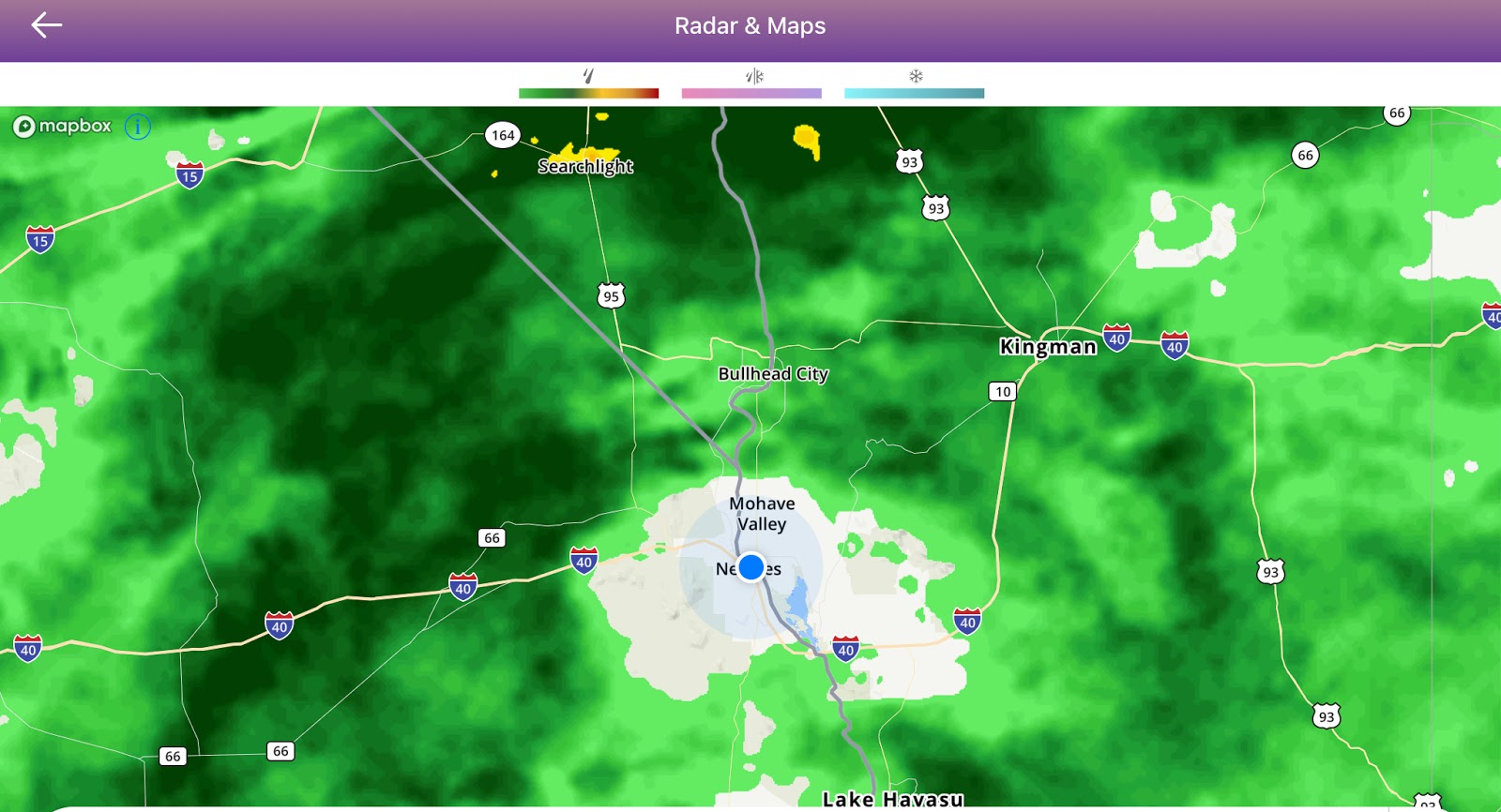
I guess Needles was the place to be. At least when this screen capture was done. Actually, it has been raining on and off since late last night. Enough for there to be puddles in the sand of the campsite. I think that Bridget may have here hands full dragging a couple of unwilling dogs around the campground. The National Weather Service has been putting out a flash flood warnings for the area.

I’ve made plans to return home for several days next month. This is to meet the State of Alaska retirement system requirement to not be out of state for more than either 89 or 90 days. I’m not sure which it is. Plus, I needed to get taxes done and a few other things. By late afternoon, the steady, light rain had ended but it was still kind of dreary.The cooler daytime temperatures meant the furnace ran more and not much solar. Though, surprisingly, we were still getting 5 amps around noon.

I’ve been looking at a solar web site called Continuous Resources, LLC, that was one of the exhibitors at the Quartzsite RV show. At the time, I was looking only at Renogy 100 watt panels to match the ones that we already have installed on the RV. But, it really doesn’t matter as long as the panel is 12 volts. This is their 180 watt, nominally 12-volt panels with an Isc of 9.87 amps and a voltage of Vmpp of 18.95 volts. The price for these panels is about $20 more than the 100-watt Renogy panels which have an Isc of 5.75 amps. That seems like a good deal to me. BTW, this is where they get their 180-watt rating. 9.87 x 18.95 = 187 watts. For our system, 14.8 x 9.87 = 146 watts. Still a good deal.

Their mounting brackets are a bit more expensive than the Renogy brackets but they do tilt. The tilting feature is important as I plan to install this panel on the passenger side of the roof and it will be over the combiner box. With the ability to tilt the panel, I will still have access to the box. At least, I'm pretty sure that the panel will fit in that spot. I'll go up on the roof and take some measurements when it's not raining. I've ordered one panel and associated installation pieces. With this addition, our maximum charge current will be around 33 amps. I'm thinking that this will allow us to run the refrigerator off of the inverter while traveling, especially on sunny days.  

Monday, February 4, 2019

Day 27 - Playing with Electricity

It’s only 9:30 in the morning and the equalization cycle has already started (control state in the red oval). Note that the battery sense voltage is higher today than the target voltage yesterday. That is due to the sensed battery voltage. As temperature drops, the voltage required goes up. When I ran an equalization cycle in Fairbanks, the target voltage was above 16 VDC due to the low battery temperature. When it this high, you really should disconnect anything in your RV that may be voltage sensitive. 15.5 VDC is borderline. The only thing running off of the 12 v system are the interior lights and the refrigerator controls.

In spite of the late morning overcast skies, we received enough sun to complete the equalization cycle by 12:20. I checked the water level in the batteries and all the cells were bubbling and only a few needed to be topped up with distilled water. I turned off the converter so the only battery charge will be from the solar charge controller.

The stock converters (built-in battery charger) that are installed in RVs are generally adequate for trickle charging the battery but don’t seem to put out a lot of current in spite of the manufactures claims. If you are charging the batteries using a generator, this results in a lot of run time as we experienced in Quartzsite. I ordered the Progressive Dynamics Intelli-Power 9270 converter with the little remote dongle that could be installed inside. It has four charging modes including a “boost” mode designed to get the battery up to 90% quickly. I wasn’t going to install it in place of the stock converter but in the same compartment as the batteries with a separate power connection. Then the cables could be a short as possible. According to Amazon, this won’t arrive until next week.

Even though the name of this RV park is Needles Marina, there isn’t a marina or boat ramp at this time. When I saw this place yesterday, it didn’t look like there was any work going on. I guess I was wrong. It looks like they are deepening the marina possibly to compensate for low water levels. From the markings on a pier (which is completely out of water) it looks like they are down ten or fifteen feet from high water. I don’t know what “normal” actually is.